
Book Review: Perfect Phrases for Conflict Resolution
Perfect Phrases for Conflict Resolution by Lawrence Polsky and Antoine Gerschel is an excellent read if you need prompts during difficult discussions. This is a great book about conflict and how to manage it in a way that keeps you calm and collected.
In many of my blog posts, I advocate preparing for difficult conversations by getting distance to process your emotions, thinking about strategy or deciding what to say! This is especially true if you feel nervous about them or feel blocked when you communicate.
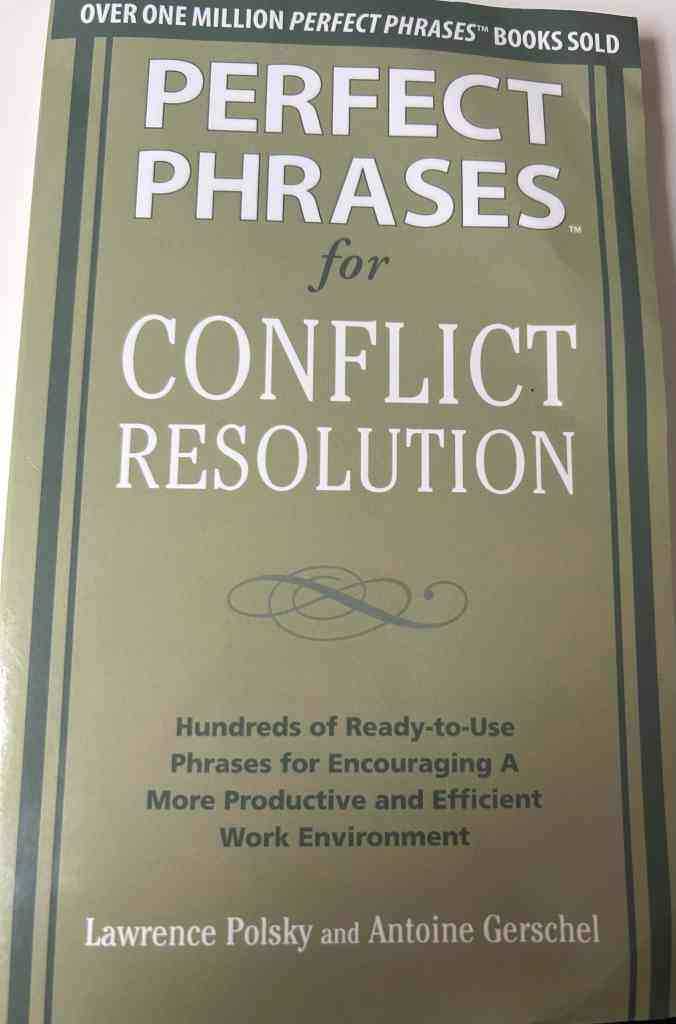
The authors of this book emphasize that the way we communicate during conflict—especially the words and tone we use—can either escalate tension or lead to constructive outcomes. The book aims to equip readers with specific, actionable phrases that can de-escalate emotionally charged situations and foster collaborative solutions.
A central idea is that conflicts often arise not just from disagreements, but from unmet needs, miscommunications, or emotional triggers. Developing emotional intelligence—understanding your own reactions and recognizing the feelings of others—is key to resolving issues calmly and productively. The authors encourage readers to approach conflict with empathy, curiosity, and a willingness to listen.
The book introduces a simple but effective framework: Listen, Acknowledge, Respond. Listening attentively and without interruption allows the other person to feel heard. Acknowledging their feelings or perspective, even if you don’t agree, helps build trust. Responding thoughtfully—rather than reacting emotionally—keeps the conversation constructive.
Polsky and Gerschel provide a wide range of “perfect phrases” tailored to common workplace situations, such as managing team disagreements, addressing underperformance, diffusing emotional reactions, and handling difficult conversations with supervisors or colleagues. These phrases are designed to reduce defensiveness and promote mutual understanding, such as: “I hear what you’re saying, and I’d like to understand more about your perspective,” or “Let’s work together to find a solution that works for both of us.”
The authors stress that conflict can be a positive force when handled well—it can lead to stronger relationships, innovation, and improved performance. However, effective conflict resolution requires ongoing practice and a willingness to refine one’s communication approach over time.

In summary, the book offers a toolkit of language strategies to manage conflict with confidence, clarity, and compassion. By using intentional, respectful communication, individuals can turn conflicts into opportunities for growth and collaboration.
Here are a few examples of phrases I liked:
🔹 When You Need to Say No or Set Boundaries
- “I understand your request, but I’m not able to commit to that right now. Can we look at alternatives?”
- “That’s outside of my current responsibilities, but I’m happy to help you find someone who can assist.”
🔹 When You Disagree Respectfully
- “I hear your point, and I’d like to offer a different perspective.”
- “That’s one way to look at it—may I share another possibility?”
However, scripting is helpful in preparing for your scheduled conversations, an uninvited, particularly tense exchange requires you to think on your feet. Pre-prepared phrases may help you to become more aware of your communication but you do need to spend time getting comfortable with your own conflict patterns and responses. You will appear much more assertive when you use these phrases BUT you also need to follow that through with consistent behaviours and responses – especially when setting boundaries. Scripting doesn’t lead to this, especially if you feel uncomfortable with some of the words. Also remember, facial expressions, body language and tone are much more explicit in communicating how you feel and they may tell a different story to your words.
This is a classic book about conflict for your reference library to help you communicate better during difficult times with a variety of stakeholders. There are phrases for every scenario in the workplace, that will de-escalate conflict and enhance relationships.