
From Endings to New Beginnings: What Managing Transitions Teaches About Change
It’s shocking how few ogranisations understand the impact of change on employees and business. What many don’t realise is what change represents: endings that can sometimes be painful and hard to accept. It’s not change that we find hard to adapt to. It’s accepting an ending or a loss that causes us to grieve. That’s why any successful organisation will ensure that they are managing transitions carefully to support employees.
Why ? Because if not, disgruntled employees struggling with loss will create conflict. This wastes time, effort and resources, not to mention the toll it has on mental health.
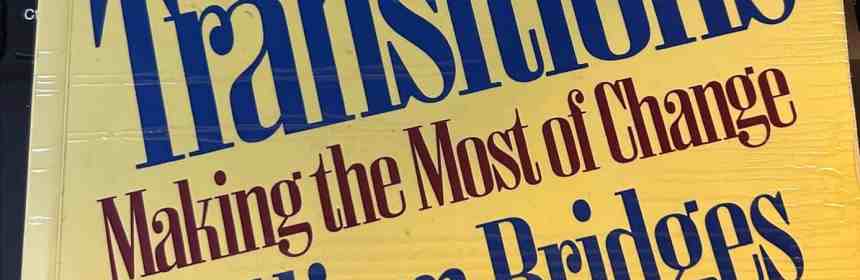
In Managing Transitions, by William Bridges, he argues that change and transition are not the same thing:
- Change is external — a new policy, restructuring, technology, or leadership.
- Transition is internal — the psychological process people go through as they adjust to the new situation.
Organisations generally focus on change (the event), but success depends on managing the transition (the emotional and psychological journey). By putting structures in place to support that transitional phase, conflict is minimised by recognising the loss and grief that can accompany even minor changes.

🔹 The Three Phases of Transition
Bridges outlines three predictable stages every person and organization experiences during transition:
1. Ending, Losing, Letting Go
- Transition starts with an ending, not a beginning.
- People must let go of the old ways, identities, and assumptions.
- Feelings such as resistance, fear, anger, sadness, or denial are normal.
- Leaders must acknowledge losses, honour the past, and communicate clearly about what’s ending and why.
Key leadership task: Help people identify what they are losing and manage the emotions attached to those losses.
2. The Neutral Zone
- A period of uncertainty, confusion, and potential creativity between the old and the new.
- The old ways no longer work, but the new ways aren’t fully in place.
- Productivity may dip, morale may waver, but this is also the crucial time for innovation and renewal.
Key leadership task: Provide structure and communication without rushing through this stage. Use it to encourage experimentation, collaboration, and learning.
3. The New Beginning
- People start to embrace the new reality, understand its purpose, and commit to new identities and roles.
- Motivation returns as people internalize the change and feel confident again.
Key leadership task: Reinforce the new direction with symbols, celebrations, and consistent actions. Make the purpose and benefits clear.
🔹 Leadership Principles for Managing Transitions
- Explain the purpose . Why the change is needed.
- Paint the picture . What the new future looks like.
- Lay out the plan. How people will get there.
- Give each person a part to play. Clarify roles and contributions.
- Acknowledge emotions. People don’t resist change per se; they resist loss.
🔹 Practical Tools
Bridges provides practical tools, including:
- Transition management checklist
- Communication strategies for each stage
- Tips for leading teams through uncertainty
- Advice for personal transitions, as individuals experience similar phases in their own lives
My Review
Transition and change often arise out of conflict and they can also create conflict. Employees may feel marginalised by decisions that don’t involve their input. An uncertain future because of lay offs or restructuring can cause anxiety and anger. Suspicions about motives might surface when there is a failure in communications that leads to negative perception. This can lead to low morale and high emotions, all of which fuel conflict .
This is this book is essential reading for any manager. So many employers fail to recognise the need to explain the reasons for change. They fail to acknowledge the psychological contract we sign with our employers. Even seemingly insignificant changes can trigger something deeper in us. The communication strategies in this book are really important. They matter if you value a motivated and engaged team. Your team should feel confident and empowered. They should want to be part of the future of the organisation. It can also help you from a personal transition perspective too.
Do you need help with unhappy employees in your business? Is it hard to communicate with the people you manage ? If so, contact me for a tailored consultation on preventing conflict in your organisation.
Discover more from The Conflict Expert
Subscribe to get the latest posts sent to your email.
Pingback: Workplace Mediation: Signs Office Conflict Needs It - The Conflict Expert