
Difficult Conversations at Work: Why I Created a Practical Workplace Communication Workbook
Difficult conversations at work are something most professionals experience, yet very few people are ever properly taught how to navigate them.
Whether it is tension with a co-founder, frustration with an employee, communication breakdown within a team, or unresolved workplace conflict that slowly builds over time, many people approach difficult workplace conversations feeling anxious, emotionally overwhelmed, or unsure how to respond professionally without escalating the situation further.

Over the years, both in legal practice and conflict resolution work, I have seen how avoided conversations quietly damage working relationships, leadership confidence, team culture, and decision-making. I have also seen how emotionally charged conversations often become less about the issue itself and more about assumptions, defensiveness, stress responses, and communication patterns.
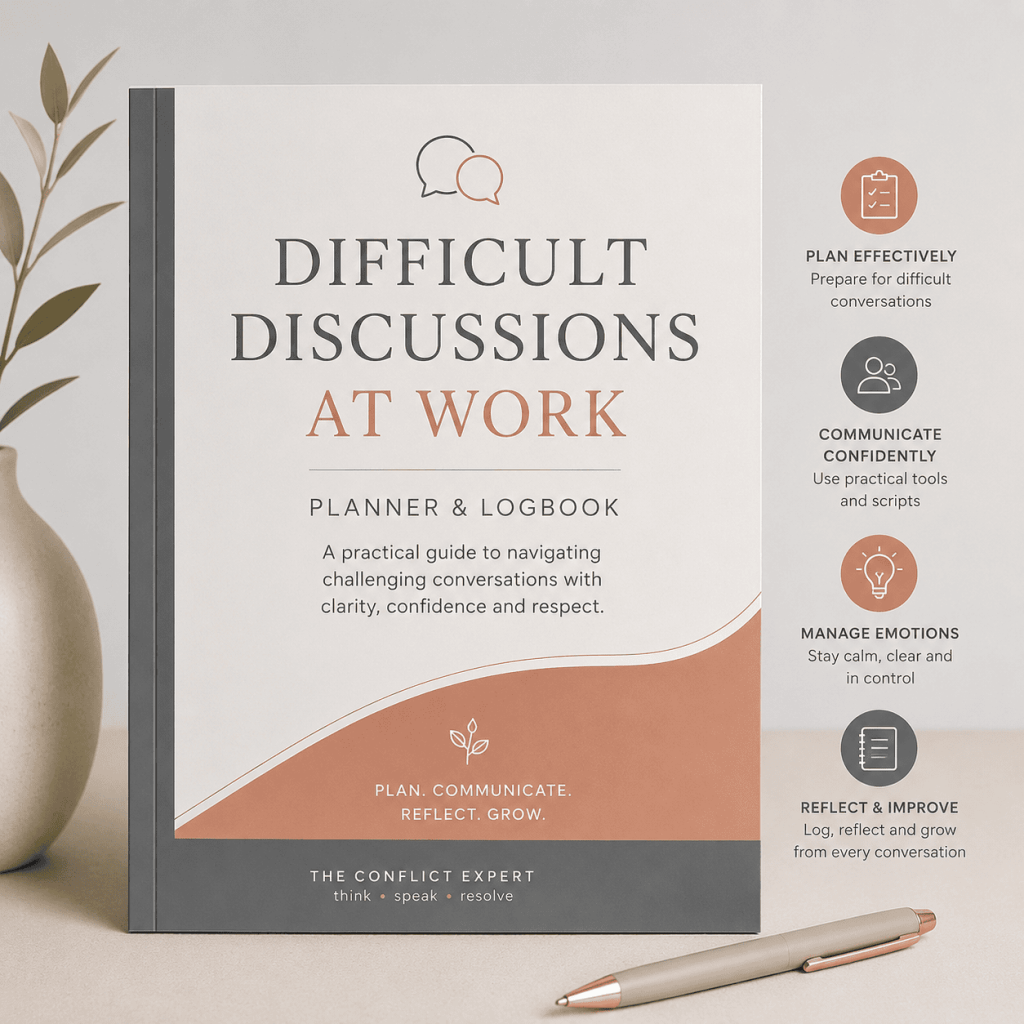
That is why I created Difficult Discussions at Work: Planner & Logbook — a practical, reflective workbook designed to help professionals prepare for difficult conversations with greater clarity, confidence, and emotional control.
Why Difficult Conversations at Work Feel So Difficult
Many people assume that conflict is simply a communication issue. In reality, difficult conversations at work are often emotional regulation challenges as much as communication challenges.
People fear:
- damaging relationships
- appearing aggressive or unprofessional
- emotional escalation
- conflict avoidance
- rejection or criticism
- saying the wrong thing under pressure
This is particularly common amongst women leaders, founders, and professionals who are balancing authority, professionalism, emotional intelligence, and relationship management simultaneously. The power dynamic can also put many employees off from approaching difficult conversations with managers.
As a result, many discussions are delayed until resentment, frustration, and misunderstandings have already grown significantly.
But when you avoid conversations or approach them aggressively, they damage trust, confidence, morale, collaboration, and workplace culture over time.
What Is Included in the Workbook
The workbook combines practical workplace communication tools with structured reflection exercises and conflict resolution strategies designed for real professional situations.
Inside the planner you will find:
- conversation planning templates
- reflection and debrief exercises
- practical communication prompts
- workplace boundary tools
- de-escalation techniques
- grounding exercises
- professional language examples
- workplace conflict reflection logs
- The FINS Method™ framework for structuring difficult conversations
The workbook is available as both:
- an interactive fillable PDF
- a printable workbook version
so it can be used digitally or by hand.
The FINS Method™ for Difficult Workplace Conversations
One of the core frameworks inside the workbook is the FINS Method™, a structured approach designed to help people communicate clearly and calmly during difficult workplace conversations.
The framework focuses on:
- Facts
- Impact
- Needs
- Solutions
The aim is to help people move away from emotional escalation and towards more constructive, solution-focused conversations without losing professionalism or clarity. It’s based on non-violent communication techniques and can be easily adapted to any conversation.
Workplace Conflict Resolution Is a Leadership Skill
One of the biggest misconceptions about workplace conflict is that strong leadership means avoiding tension or remaining endlessly agreeable.
In reality, healthy workplaces are built through clear communication, professional boundaries, emotional regulation, and the ability to navigate difficult conversations constructively.
As I often write, conflict is not the problem. It’s a healthy aspect of any relationship. It can be used to strengthen relationships, build trust after a breakdown and encourage different perspectives, opinions and approaches. It becomes damaging when conflict is left to fester or it is communicated in a destructive manner: insults, disrespect, the silent treatment, violence.
Learning how to communicate calmly and assertively under pressure is one of the most valuable professional skills any leader, founder, or team member can develop.
The Workbook Is Now Available
If difficult conversations at work are something you currently struggle with, whether as a founder, manager, team leader, or employee, this workbook has been designed to provide practical tools you can immediately apply in real workplace situations.
Click the button below to find out more about about the workbook.
Better conversations create stronger workplaces, healthier professional relationships, and more confident leadership.
Download your copy today and keep it for every time you have to prepare for a difficult discussion. Over time and with practice, conflict will no longer feel uncomfortable. It will feel like a normal part of human relationships (which it is ! )
Discover more from The Conflict Expert
Subscribe to get the latest posts sent to your email.