How to Stay Connected and Handle Disagreements When Family Conversations Turn Controversial

Thanksgiving, or any major family gathering, can bring warmth, connection and laughter. But it also has the potential for controversial conversations to ruin the day. Someone mentions a political view, a value, or a topic you feel strongly about, and it triggers you. Suddenly, your heart pounds, your voice rises and you find yourself stepping into a conflict you’d rather avoid. This blog post is about staying connected and how to handle disagreements between family members when it really matters.
If, like me, you feel strongly about many things, you can probably picture the scene. A comment escalates to a full blown arguments and you regret getting so angry. It can be exhausting and uncomfortable for others, especially on a day like Thanksgiving.
You don’t have to agree on every issue to feel close. You can get get through the day without engaging in conflict and this is how you do it:

1. Ground Yourself First
Before you respond, pause. Notice what’s happening inside you. Controversial views often upset us because they threaten something we hold dear. But you can’t handle disagreements well unless you calm your triggers. Ask yourself:
- Do I feel disrespected?
- Do I feel unseen or small, especially if it’s a senior family member challenging me?
- Do I feel unrecognised for my knowledge or experience?
- Does their differing view feel like separation, a sign we may be growing apart?
- Do I just find their way of communicating, aggressive and insulting?
If so, take a deep breath, place both feet on the floor and remind your body: I can respond calmly even if I disagree. This self-awareness becomes the calm center from which you act rather than react.
2. Understand That They Have Their Reason for Their Views
People’s beliefs don’t emerge in a vacuum. They come from fear, hope, experience and identity. Research shows that those who lean to the political right often have heightened feelings of fear about the future. They worry about the stability of society, tradition and identity.
At the same time, psychological research suggests that people on the left orient more towards hope, possibility and change rather than fear of loss.
When you recognise that the controversial view you’re hearing is tied to someone’s emotional need (safety, recognition, hope), you’re better equipped to respond with empathy.
You can think: I do not share their view, but I understand their need. When you’re dealing with family conflict during the holidays, this phrase can help you stay focused on your inner calm.
3. Be Curious Instead of Combative
Rather than opposing the view head-on, try curiosity.
Curious questions shift the dynamic from battle to dialogue. When we ask rather than argue, we say, I’m trying to see you. I’m trying to hear you. That simple shift can soften the emotional charge. Curiosity and anger rarely coexist in the same moment. This shift changes the conversation from, I am right and you are wrong, to Let me understand more about the way you see the world.
Changing your perspective is essential in staying calm during family discussions, when managing controversial views at family gatherings and especially when handling political arguments at Thanksgiving.
4. It’s OK to Agree to Disagree When You Handle Disagreements
Accepting someone doesn’t mean you share their views. Sometimes, it’s better see the bigger picture and keep the peace. You can say something like:
“I value our relationship too much to keep arguing about this.”
You’re not trying to educate them or defend yourself against attack. You’re saying: our relationship matters more than winning the argument. This is a compassionate way to tell somebody they matter to you but you also have very different views. This is the cornerstone of tolerance.
Turning Conflict Into Connection
Conflict isn’t the opposite of connection . Tt can be a doorway to it. When handled with awareness, empathy and curiosity, what looks like a clash of views can become a moment of deeper understanding.
So this holiday season, choose presence over persuasion and compassion over being right.
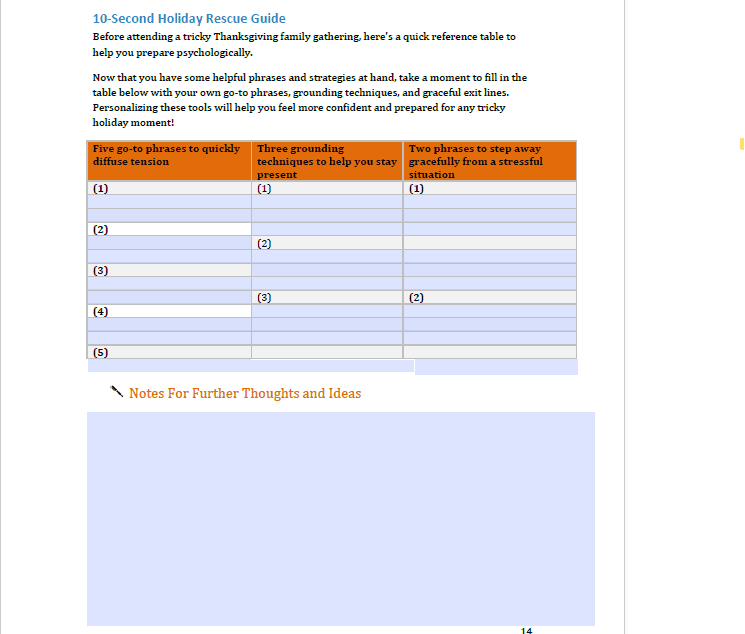
Your Next Step: Be Ready for Anything This Thanksgiving
If you’d like ready-to-use scripts, emotional regulation exercises and conversation strategies to help you stay calm, clear and connected at the dinner table, my Thanksgiving Conflict Toolkit launches on 11 November.
It’s your step-by-step guide to handling tricky family conversations with grace , so you can focus on what really matters: connection, not conflict.
Mark your calendar for the launch of the Thanksgiving Conflict Toolkit on 11 November.